Sunday, February 12, 2012

Happy Valentine's Day Everyone!

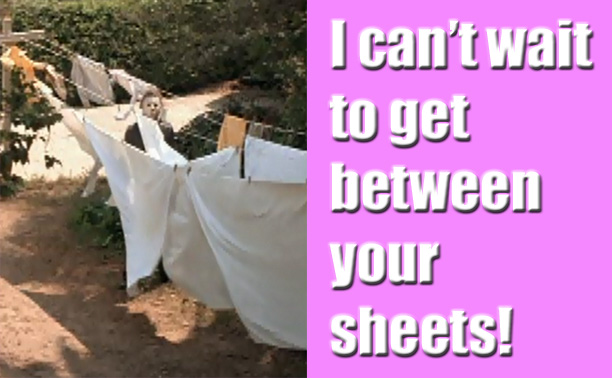
To celebrate, I've made a compilation of horribly inappropriate Valentine's Day cards!  I hope you enjoy and continue to spread the terror love.

Candyman


Friday the 13th


Halloween


Hellraiser


A Nightmare on Elm Street


Sunday, January 8, 2012

The Warriors: Greece Meets West


                Walter Hill has said, "Every film I've done has been a Western.”  He doesn’t mean this, obviously, in a literal sense, but it’s an interesting way of reading his body of work.  After all, what are the key thematic components of the western genre?  1. The protagonist(s), whether hero or anti-hero, have a strict code.  2. A good western treats the landscape as an actual environment and not a mere backdrop.  The small, bustling community, the arid desert, snowy plains or dangerous forests—these places force reactions from the characters.  They help inform us of the story we are about to experience because they show us that these are characters of means.  It constantly has to be fought back, tamed—the location cannot be ignored.  3. Westerns are about taking a stand.  It can be personal or more global, righteous or evil, but every Western, bottom-line, has someone willing to fight and die for what they believe.  You have that in Streets of Fire, you have that in Last Man Standing, Hickey and Boggs, not so much in 48 Hours (although Eddie Murphy does put on a cowboy hat and go to a western bar, so maybe that counts for something) and you sure as hell have that in The Warriors.
                Now, with The Warriors not only must you must keep the Western framework in the forefront, but you also have to carry another thought in the back of your mind: That of ancient Greece.  I’m serious.  Depending on the version you are watching Walter Hill may come and spell it out for you during the prologue, but there is a specific historical event that inspired how he shaped the direction of the story.  It is The Anabasis, the Greek story of The Ten Thousand and their arduous journey back to their homeland. 
                To make a long story short, The Ten Thousand fought a somewhat successful battle deep in enemy territory which would have been an outright victory had their leader not been one of the small few killed during the siege.  Now they had a conquered kingdom and no leader to take it over.  They were left with no other option now but to fight their way back, make allegiances or use trickery to pass through the other controlled kingdoms to make their way—wait for it…waaaait for it—to the sea.  Sounds familiar?
               
********

                American history has always been fascinated with outlaws and villains, almost as much as gallants and lawmen.  Look at the string of films dedicated to Dillinger, Bonnie and Clyde, Capone, etc.  It stands to reason that the Western, as a decidedly American genre, should work equally well when the protagonists are heroes or anti-heroes.  Let us not forget: As much as The Warriors might have ingratiated themselves to us through the course of the story, they are still criminals.  But they are criminals with a system of honor.
                In the story The Rogues certainly act villainous and provide the initial incident, turning The Warriors into fugitives, but they aren’t necessarily the villains.  The role of primary antagonists is reserved for The Gramercy Riffs.  They are organized (to extent that you can begin using the word militant), disciplined and last, but not least, statesmen.  It was after all their group who organized the summit meeting and it is they who are pushing for peace between the scattered gangs.  And when the meeting falls apart it is The Riffs who put the bounty on The Warriors’ heads.  Keeping in mind the theme of ancient Greece, The Gramercy Riffs are a true city-state and are steps away from uniting the smaller rabble into an empire.


The Riffs getting tuned up.

                What’s interesting in all of this is how this all feeds back into the Western format.  The Warriors and The Gramercy Riffs are not traditional enemies—there is no vendetta to clear nor is the conflict of the night economically or territorially motivated.  The Riffs are after all THE gang and I’m sure they are a template that the much, much smaller Warriors outfit has looked to.  The Warriors’ sense of duty and honor seem very parallel to The Gramercy Riffs.  No, the reason for the evening’s violence is based on a misunderstanding—The Warriors allegedly broke the ceasefire and killed a prominent member of their group—and clearly the Riffs’ code of honor cannot suffer such a grievance without retribution.
                Naturally, having a code and being willing to die making a stand are deeply connected.  One cannot exist without the other.  They are compulsory elements of the genre and the reason why I have listed them as two separate components comes down to the following:  In the Western the antagonists have as strict a code as well.  The villains are always willing to kill to meet their ends, but only the heroes are willing to die for theirs.
               Their whole situation could be ended by turning themselves in, surrendering to the next gang they meet or taking off their colors.  But if any of them were to suggest that, they wouldn't be wearing that Warriors vest in the first place.  To them it's better to face death a Warrior than to live life as anything less.

********

                The encroaching police force, mercenary gangs, inclement weather and diverting subway trains offer the second component in the Western equation.  The setting is not a static, placid backdrop.  Cataloguing these events and the group’s responses to them would result in nothing more than a plot recap.  I think it’s something to keep in mind though while you watch the film.  The key difference in this—between backdrop and an active landscape—is how it forces character development.  In a more traditional story, interactions between the protagonist(s) and other characters force them into action and to change, but in the western that connection is removed.  The characters and gangs The Warriors meet are incidental and tied to that specific location.  They don’t exist beyond one mere scene.  Westerns are solitary, stoic, bleak.  With these exchanges, nothing is revealed about the people they meet, instead it focuses solely on our heroes.  These scenes are less a dialogue and more a reaction.
                Coming back to the theme of classical Greece, there are three locations/events in particular that I feel offer a modern reading of the Odyssey and Greek myth.  The beautiful undercover vice officer who leads—ahem—Ajax to his doom bears great resemblance to a siren.  The hilariously named Lizzies and their ensnarement of The Warriors (possibly the closest to succeeding in the film) parallel Odysseus’ crews disastrous stay on Circe’s island.  And the shutdown of the subway train when they were on a direct route home can be seen as the storm that drives Odysseus’ ship back to where it started when they were already within eyesight of Ithaca.

In clockwise fashion: 1. The Siren 2. Waylaid by the bag of winds 3. The chorus 4.  Circe's Island
            
               The simple fact that these allusions are built into this not-too-distant-future gang beat ‘em up movie shows what a subtle and well versed writer Walter Hill is.  This movie is so unassuming, so basic in its appearance that I’m sure these references go unnoticed by a majority of viewers.

********

                I want to end this, befittingly enough, with the end of the story.  Not the last few minutes before the credits roll, but the real, emotional ending. Because after this point it’s simply a matter of closing the ledger.  This is the most important moment in the movie; it’s beautiful, poignant, but most of all, fragile.  What remains of the group has finally made it to the train; the last leg of their quest is ending.  They are bloodied and exhausted.  Simply put, they stand out.  But we have to remember, they are “outcasts” and always will be.  No matter what, they will always stand out.  Whether their vests are torn from fighting or not, The Warriors live on the fringe, outside the normal scope of society.  And it’s here, when they should be feeling victorious, that they run into the disco kids.
                This group, unlike The Warriors, hasn’t spent the night fighting for their lives and never will.  They have nice clothes and nice smiles.  And when this group notices The Warriors it’s never been clearer that they don’t have these things and maybe never will. 
                It’s so painfully simple that if you’re not paying attention you might miss it.  Mercy reaches up, embarrassedly, to fix her hair and Swan stops her. 
               She doesn’t have to apologize. 


                In that one moment, Swan tells us that none of us need to be ashamed of who we are. 
                To me, this is the climax of the film.  The showdown on the beach with Luther certainly feels necessary and rectifies the false accusations from earlier.  We are allowed that satisfaction.  But it seems to me that we reach those final scenes solely from the momentum of preceding events.  There is a distinct feeling of…inevitableness about how it plays out.  Housekeeping.
                This whole time we’ve been searching for the exact thing that The Warriors are making their stand for and I say it’s a fight for their very existence.  Not a fight for their lives but a fight to exist.  They can’t fit into a conformed societal role, but they have to be somewhere.  That’s what this was all for; they are carving out their own place.  They are the social misfits that can never really connect to the mainstream.  This midway is their home and they will stand and fall together.  These notions of loyalty and valor and duty they were carrying around are no longer play-acting, but now real after being tempered by the events of the night.   
               The odyssey really ended back there on that train.  It was a subtle, elegant moment, but it spoke volumes.  The way of The Warriors is not for me or most others, but there is a certain nobility to it all.  To be able to stand up tall and declare that this is me and I refuse to compromise ever again.  That—right there—is something we all should be fighting for. 
               
                                “Thálatta! Thálatta!”


Miscellany:

It might just be the confluence of emotions, but I'm always struck by how simply fitting and epic the closing credits song is.  It always leaves me feeling like we've all really accomplished something here.  God I want to go to the beach and have a showdown rightfuckingnow!!!


Saturday, November 5, 2011

Halloween: The Shape of the Unheimlich


Whenever asked to name my favorite horror film I always arrive at one of two movies, both by the legendary John Carpenter: Halloween and The Thing (I’ll write about The Thing soon enough).  I find both to be strong contenders content wise and excellent examples of the qualities I am arguing for.  To wit, that a good film, regardless of its genre or labels, should not only deliver on the expectations of its audience, but also subvert those desires and produce something unasked for, but equally satisfying.
            Halloween is so beloved not because it’s another slasher with a body count, but instead because it is a thriller that delves into the uncanny.  Haddonfield isn’t just a town in Illinois; it’s also your hometown.  Laurie Strodes lives on your block.  Almost two-thirds of the story is dedicated to a day-in-the-life portrait of these young women, making the switch in the final portion all the more stark. 
            Not all of them are necessarily likable, but you have by this point spent enough time with them to know them as more than the card-board cutouts you might find in the lesser titles of the genre.  They feel like people that will be missed by someone and that makes their passing more real. Michael Myers is the caprice that fate sometimes deals out and these young women cannot escape him.  Carpenter has stated that all of his early films dealt with the notion of fate and how intractable and immutable it is.  Michael Myers is presented as an unstoppable force.  His motives are his own and nothing can deter him.  The terror and dread that you feel in watching this movie directly stems from the fact that Michael Myers’ motivations and thinking are unknowable and un-understandable.        
Not only is he incomprehensible internally, being unable to visually decipher him is also built into the film.  Just consider the approach taken to filming Myers.  He is almost always obscured and his actions take place almost exclusively in shadow: Peeking around a hedge, hemmed in by car windows, between a series of fluttering sheets and always surrounded by darkness.  Or, examine it more meta-textually—in the credits for this and all films, he isn’t listed as Michael Myers, he is The Shape.   

In each instance, it is clear that he is present, but impossible to determine his complete shape.

* * * *

            There are two ways that you can read this text and both versions are totally dependent on which edit you’re viewing.  Firstly, you can read it as part of a series, whereupon it is revealed that Myer’s is homing in on his long lost sister in order to fulfill some sort of familial bloodlust—the reasoning for which becomes increasingly more muddled and strained as the installments move on.  Or, secondly, as a stand-alone movie (as it indeed was during its initial release), John Carpenter’s singular take on the burgeoning slasher genre and not part one of an eight-part (or seven if you’re splitting hairs) franchise.  In this latter scenario Laurie is a beautiful, charming young-lady who has the misfortune of drawing the attention of one deranged individual.
I have seen both cuts of this film and feel that the original, theatrical edit is the superior.  The reason for this should be clear to any fan of the original: Halloween is an exercise in restraint.  The other cut, and sequels, give too much information, overstate the motives.
I completely see the reasoning behind the additional footage.  From a technical standpoint, when it was re-cut to be aired for television some of the more graphic moments had to be dropped, which necessitated filming new material to fill that space.  By this point the sequel had already been created and established the new continuity that the rest of the franchise would build on.
            But, the additional scenes in the extended cut fundamentally change the reading of the story.  The clearest instance of this is the bloodied word scrawled on his wall back at the asylum: SISTER.  With that one added detail, we can all breathe a collective sigh.  The movie becomes safer to watch.  It always had to be Laurie; this is her birthright.  Even had it been us who walked in front of the Myer’s house first that Halloween morning, he still would have chosen her.  We no longer have to worry tonight when we turn the lights off. 
Loomis senses the evil in Myers, knows of the preternatural patience, but Myers in this reading is still a man.  Not the avatar for the Spirit of Samhain or virtually immortal as he becomes in later installments.  He is human; he drives a car (There’s even that very upsetting sequence where he slowly follows Tommy as he heads home from school—it’s shot over the shoulder and feels so much like Kidnapper POV that I’m glad they only use it once.).  He eats, even if the only thing he could get was a stray dog. 
            To me that version is scarier.  I don’t anticipate running into too many druidic demi-gods in my lifetime, but the other reading—that sort of evil lives in many hearts—the other reading is the stuff headlines are made of.
            Of course to refer to him as a man gives the mistaken impression that he has conformed to what society would expect of that term.  He may be adult sized, but in many ways he stopped growing up the night he murdered his sister.  It’s evidenced by the Halloween style pranks he plays during the movie—stealing his sister’s headstone so that he can use it to scare Laurie, dressing up as a ghost before killing Linda or the macabre, but darkly funny, ways he hides the bodies for Laurie to find (they’re literally popping out at her).  But I think the most unsettling thing he does in this vein occurs right after he kills Linda’s boyfriend.  Myers pins the teenage boy to the wall like an entomologist and then stares at him as his life slips away.  He tilts his head from one side slowly to the other, almost as if he is confused by what is happening, like he didn’t know if he played that hard with his new toy it would break.


* * * *

To examine something, to shine a light upon it, the item in question must cast a shadow.  I feel this is the true value of the horror film.  It allows us to discard the saccharine sentimentalities and the plaintive dialogue of mainstream films and terrify us.  By exposing our fears, it points out the things we hold most dear.  By acting as a silhouette the darkness inherent in the horror film is capable of giving us the clearest outline of our souls.
            Halloween is terrifying not because some guy in a washed-out William Shatner mask is stalking about with a 15 inch blade, but because he is there at all.  Michael Myers is in our yards, in our garages, our bedrooms.  His blank face is waiting to be filled in by someone—perhaps that person you passed on the way to the car, the person in line beside you in the supermarket—and his motives, like his face, are never clear but still fatal.  He is the Boogey Man.  He can be anywhere for the simple fact that he can be anyone.  Laurie Strodes dropped a key off for her father and it aroused the attention of the wrong person.  Halloween reminds us that no matter how our work day might have gone, the errands we ran, the chores we performed, throughout the small and large of daily life there is always, always, underneath it all an ache that never stops buzzing: I want to feel safe.  Bringing that to light underscores just how quickly a situation can go from being labeled “secure” to being “dangerous”.
            Let’s take one of the film’s final moments as an example.  This scene fills me with dread like no other part: Laurie has narrowly escaped the first encounter with The Shape.  She smashes her way out of the neighbor’s house and limps her way back to the street.  The entire time she is screaming at the top of her lungs for help.  No one answers.  One house goes so far as to turn the lights on and peek through the window, but nothing else.  She is left to fend for herself as The Shape pursues.  This is a familiar street and she knows the people that live here.  None of that matters now that he is here.
What bothers me most about this scene is how starkly alone Laurie is revealed to be.  She might as well be on the moon—her neighbors simply refuse to help.  And what is truly horrifying is how this scene was inspired by a real event.  In 1964, Kitty Genovese was murdered in front of her apartment and anywhere from a dozen to 40 neighbors heard the attacks and her cries for help, but no one came to help her.  It makes my blood turn cold when I think about it.    
            Beyond the realm of fiction, the events in this movie have some anchor to the real world.  Freddy is a spirit, Jason a ghoul, Pinhead a demon (or angel to some), but Myers is a flesh and blood maniac. 
            And while you can argue that most of the killers in slasher movies were also flesh and blood maniacs, you have the extra removal from real life by the locale.  Halloween isn’t set at the first Valentine’s Dance in ten years in a remote mining town, or on Prom Night, or at a summer camp, or on a speeding party train—situations that you might find yourself in, but certainly far from ordinary backdrops.  Halloween, as I’ve said before, happens in our yards and our own homes.
And if there is one place in your day to day life that you should feel safe, it is your home.  That is the heart of the uncanny in this film—that the most familiar setting in your life should be un­-made, that your home should become an un-home.  How would you ever be able to sit down in your living room and watch a movie comfortably again knowing that he was there?  How would you be able to sleep in your bed?  It wouldn’t matter how many houses Laurie moved into from that point on, that thin veil, that illusion, that is our only security has already been cut.  When you get down to it our home is no more a fortress than any other place, but to challenge that, to make the center of our lives the springboard for such a threat is a subtle and truly insidious thing to do. 
            

Consider this final subversion: As a child the closet was always the place to be feared because it was from there that the monsters tried to escape.  It was dangerous because it was dark and unknown.  During Laurie’s final confrontation with The Shape, she hides in the closet.  Here the monster wants to break in.  And she is in the most danger in this scene when she is exposed by the light.  If the closet can be seen as a spiritual Pandora’s Box—everything evil we can imagine is contained within—what does it mean that The Shape wants to break in?  Or the role-reversal of light and shadow? 
It’s as if this creature wants to destroy Laurie (and by proxy us) on both levels, physically and mentally.  By leaving no corner secure, The Shape ensures that after this night we all understand that no one is ever truly safe.


Coming eventually...

Saturday, September 17, 2011

Because He IS Batman, You Moron!!!


Sometimes I write semi-scholarly short essays in which I try to find the intersection between academia and real human experience and sometimes I make these.

My first Meme.  Be gentle.

Monday, September 12, 2011

How My Heart Behaves: Some Thoughts on Robocop


The question of our humanity—how to find it, safe guard it, lose it, redeem it—I think, is the ultimate purpose of storytelling.  At the root of it we consume stories, yes, to be entertained by the proceedings, but also to be nourished spiritually.  Whether that be through a reinforcement of morals and ideals, a cathartic release, a vicarious experience of watching the fantastic, unlikely or uncanny, the method of delivery for that nourishment depend both on the story in question and your predilections at that moment.  But that desire to be enriched, it is always there.  Art and storytelling allow us to examine themes and aspects of ourselves that might otherwise go unexplored.
I’ve put a lot of thought into this and I’m (almost) always serious when I talk about movies.  Hence, when I say without hyperbole that Robocop is the greatest science-fiction movie I’ve ever seen—I mean it.  More so than any other science-fiction film it begs that question: What does it fundamentally mean to be human?  And more so than any other film of its kind, when I watch it I feel better.  Stronger.  Faster.  Harder.  Most people hear the word Robocop and then the phrase “greatest sci-fi film of all time” and immediately tune out.  “Robocop?  That’s just a mindless action movie!”  But if you hear me out I’m hoping you will at least see my point of view, even if you are not completely convinced by the argument.
First and foremost, let’s be clear about qualifying it as an action movie rather than a science-fiction movie.  There are really only three-ish action scenes it that are noteworthy and I feel by other “action” movie standards it’s really not consistent.  Yes, there is violence in it.  And, yes, the violence, when it appears, is quite extreme (especially, if you’re watching the director’s cut—which I always recommend for this film).  But while the violence in it is intense, it really isn’t protracted and it is certainly not frivolous.  It’s punctuation to a scene, but not really the point of the movie.  You have primarily: 1. The scene where Robocop busts (destroys) a drug lab and arrests Boddicker.  2. The ending, where Boddicker’s gang blows up half an abandoned iron foundry trying to kill Robocop and 3. The scene where ED-209 shoots Robocop a lot and he stumbles down the hallway to escape, only to find himself in the parking lot at the mercy of the police who also shoot him a lot since they have orders to “shoot to destroy” (getting shot at a lot and limping your way to an escape doesn’t exactly strike me as “epic action”, but I’m including the last one because there certainly are a lot of bullets spent).  Aside from that, Robocop punches a bad guy or two, fires a few other shots, but it’s all so quick that the action is over within a few seconds.
This isn’t an action flick with elements of sci-fi.  If so, I think by my highlights section above you could consider it one of the laziest action films ever produced.  If anything, this is a science-fiction film that incorporates violence in order to further the story.  Not the other way around.
Now, I’ve said this numerous times before and I think it’s worth mentioning again here considering the topic, but I think violence for the sake of violence is lazy, flaccid storytelling.  It adds nothing to a plot.  Robocop does have moments of ultra-violence, but it is always to serve a purpose.  Filming mindless violence does nothing but expose the sadistic nature of the film-maker and the audience who willingly buys into such a production.   Or, to sort of appropriate another literary idea: If Ensign Chekov shows up unexpectedly with a phaser drawn and doesn’t shoot it before the episode is over, I’m going to wonder why he was in that scene at all.    In good storytelling, if it doesn’t serve a purpose, then you should cut it.  It doesn't matter if it is dialogue, settings or gunfights & explosions, if it fails to propel the narrative forward, then it is dead weight.

********          

While the film is directly about the reestablishment of one man’s lost identity, I think in a broader sense you could make the argument that it is also about the assertion of our collective identity and worth.  Time and time again, Omni Consumer Products (OCP) manipulates local events for their gain 
and considers people’s lives a commodity.  When the young executive is turned into hamburger meat at the ED-209 unveiling, it’s “a glitch”.  The Old Man is pissed because they might lose up to 50 million dollars in interest payments.  And Bob Morton leaves that meeting without a second glance for his friend that was killed that he was talking to just moments before.
The privatization of the police is a calculated move on the corporation’s part so that they can mismanage it enough to force a police strike, creating a platform for their new security products.  Never mind the city that is tearing itself apart with crime or the officers who fell in the line of duty from this negligence (which OCP later capitalizes on as a pool of “volunteers” for their Robocop project).  It’s chaos, carefully cultivated and orchestrated, so that when they tell the populace they have the solution and it’s called DELTA CITY everyone will jump at it.
At times, I too feel like a mere statistic.  An employee number; a figure to be quoted in an article about my lost, jobless generation; a license and registration; but not always a person.  You can call it cliché, but the real bad guy here is Big Business, with too much power and no supervision.  I think the social comment is, "Watch out before they turn us all into machines". 

The promise of a better future is a grim irony here.  With enough violent crime, OCP can get the support it needs to finish its project.


And here is Robocop.  Our dilemma of fighting the system gets played out by his actions.
Dick Jones calls him a thing.  He’s a product.  The clandestine Directive 4, Dick Jones reveals, was added by him.  It’s a program inserted into Robocop’s mind that prevents him from acting against an officer of the corporation.  After being told time and time again that he is property and replaceable, even programmable to do things against his own wishes, what happens during this confrontation between the two?  I think it’s one of the film’s most important moments.  Robocop is shot and part of his visor is broken off.  Remember your classical art studies—what do the eyes represent?   They are windows to the soul.  And here you have Robocop at his weakest moment since being turned on, literally knocked to his knees, and he is revealed to be—still in the end—a man.


Robocop is surrounded by gunfire.  His hand raised behind him is a display of vulnerability.  It is a plea for compassion.  Leave a machine running long enough and it will eventually wear itself down.  They do not possess a self-preservation instinct.  Even the more sophisticated robots that are programmed with an awareness of themselves and their environment cannot ask for mercy when faced with death—only the living do.

********

Every good movie, in my opinion, has a heart to it.  There is a central moment that anchors all of the proceedings, and from that place all of the ideas unfurl.  With Rushmore, as I’ve said before, it’s the moment where Ms. Cross takes off Max’s glasses and sees him for the man he might be.  In Return of the Jedi, in fact for the whole original trilogy, it is the moment where Vader looks upon his son moments from dying at the hands of the Emperor, the good and the evil aspects of his life, and he chooses to save the former.  With Robocop it is the scene where he returns home.
In his remembrances he is always leaving home, but when he reclaims his memories after becoming Robocop he finally has the chance to return.  The house, naturally, is empty.  The detritus of his old life lay scattered about, too painful for his wife to keep—their potted plants withering away, A World Class Husband mug, some recent Polaroids (burned in a hurry because they didn’t want to keep them), a sink full of flowers.  Each room he enters awakens a new memory and this process is a revelation to us watching.  Throughout the movie we have seen brief glimpses of Murphy’s family life, but his homecoming scene is the most complete and sustained recollection of the life he once had.  Because of this story construction, the scope of what has befallen him dawns on him and us simultaneously.  His wife was madly in love with him.  His son seemed bright, young and happy.  They were a perfectly adjusted, suburban, happy family.  Now we understand what he had and what he had taken away.  Beyond the loss of his own life, we see some of the effect it had on his wife and son.  That house was a pain they couldn’t escape fast enough.  
Robocop’s body language is very consistent throughout the movie, but in this one moment it changes.  It almost seems like Murphy is trying to break free of the armor, of the Robocop persona, of the situation.  That brief instance before he smashes the monitor, he looks like he cannot contain himself.  It’s an all too human reaction when faced with outrage.
With an awful clarity, his desire for justice comes into focus.  It wasn’t just his body Boddicker and his gang destroyed, it was his whole family too.  Which, in a way brings me front and center to the primary reason why I find myself so fascinated with this movie: It seems to say that no amount of science, magic or alchemy can ever occlude the human spirit, our dedication to those we love, or our basic need to be revenged.    His corporeal self was annihilated.  His life was painfully taken from him.  And when he was resurrected his memory was erased and his personality stolen and reprogrammed from the bottom up.  He was no longer Murphy, he was a just a shell, branded by OCP and told how to act.  But piece by piece that construct sloughs itself off as his original self resurfaces.  By the film’s end he is no longer the man he began as, but is certainly no longer the cyborg the company thought they had constructed.  That human spark that is in all of us could not be smothered; it smoldered and eventually caught aflame again.  That to me is a truly remarkable idea, both inspiring and comforting.  We are more than flesh and synapses.  Even if it is not necessarily true, I want to believe it.
I want to believe that even in death something of us will remain.